Overview
The PROVES kit XY Solar Boards...
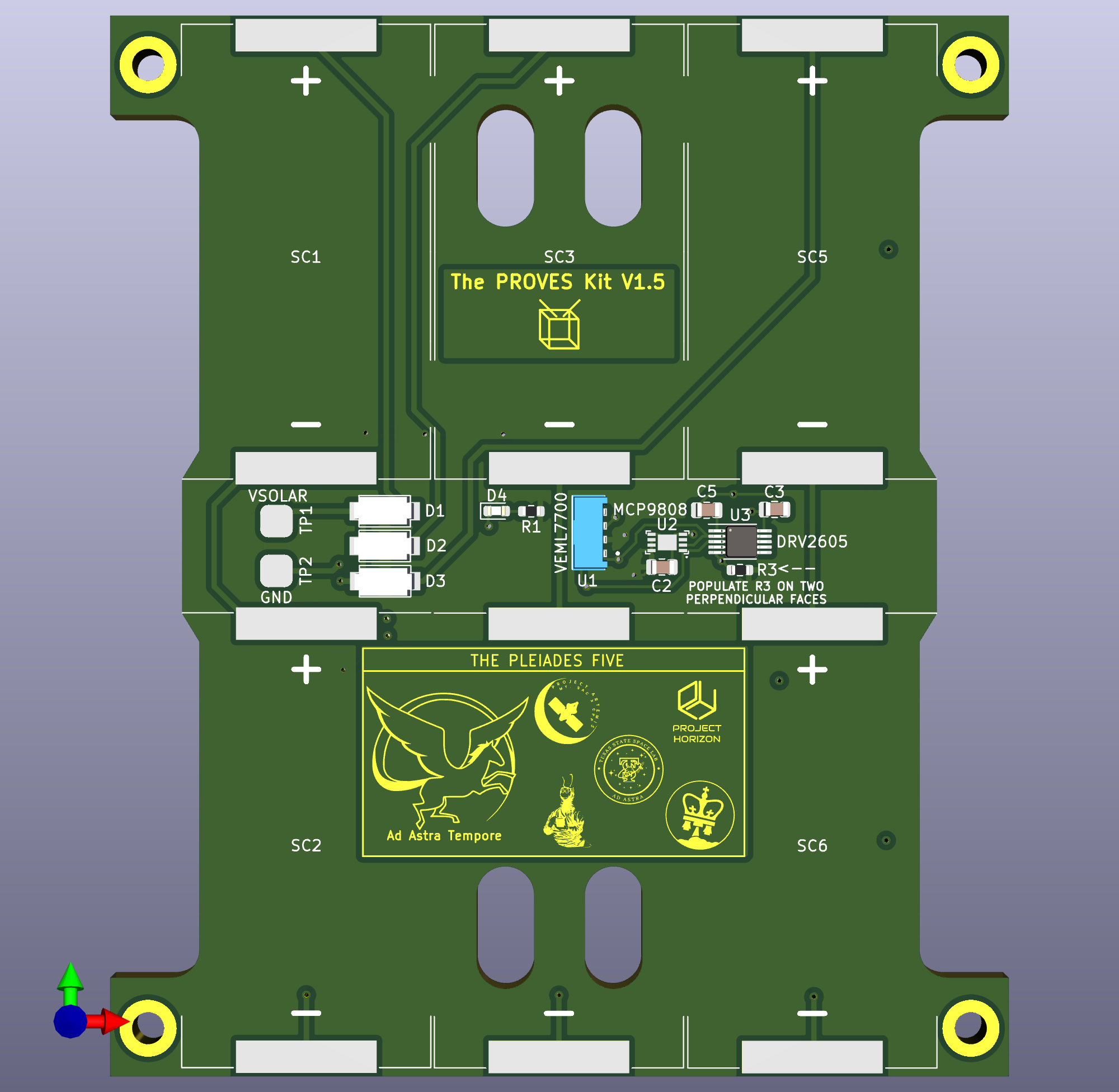
Figure 1: A Render of the Pleiades Five XY Solar Board
Getting Started
!!! Find the Structure on Github Here!
Utilized Parts
Each XY solar panel implements the following elements:
(6) AnySolar KXOB101K08TF Solar Cells in a 2s3p configuration
These are silicon solar cells from the Korean company AnySolar. They seem to be of a similar makeup to those employed by calculators. There is an EVA film that protects the cells and is fairly resilient.
One of the big things that the really expensive triple junction cells bring to the table is guarantee of performance in the space environment over a 25 year mission life. We have no idea how well these AnySolar cells would do after years of being in space, but the Stanford team has validated at least 3 solid months of lifetime out of them with no noticeable degradation.
Microchip MCP9808T-E/MC I2C Temperature Sensor
This is a temperature sensor. Not much else to say about it.
TI DRV2605LDGSR I2C Haptic Motor Drivers
These low current motor drivers are used to energize the magnetorquer coils inside the PCB. Because the solar boards are a 4-layer PCB, we were able to stick two artisinally hand drawn coils that are connectd to these motor drivers. The haptic motor drivers push very little current through the coils, but it is still enough to create enough of a magnetic field for detumbling!
Vishay VEML7700-TT Ambient Light Sensors
The ambient light sensor returns a luminance value proportional to the angle of incidence of the sun. It tracks roughly a bell curve.
Fun Blue LED!
A great indicator that everything is powered up!
5-pin Molex 1.5mm Pitch Picolock
This positivly locking conenctor carries VSolar, 3.3V Power, Ground, and I2C connections for all the face sensors.
Design Rationale
The goal for the these XY solar panels is to create a solar panel board that can work on any XY face of the satellite without modification. This modularity allows us to reduce the number of unique parts, simplifying integration and testing while also reducing cost in manufacturing.
Use of Silicon Solar Cells vs Gallium Arsenide
Most traditional space missions fly using Gallium Arsenide (also referred to as GaAs or Triple Junction) cells due to their very high efficiency. By our reckoning, virtually the entire Triple Junction solar cell industry serves space applications as the extremely high cost of these cells prohibits their use for any terrestrial applications.
Today it is believed that silicon solar cells are actually the most common solar cell chemistry flown in LEO (pretty much all of them on Starlink satellites) due to their very robust supply chain and radiacally lower cost.
Known Issues
There are no known issues with the solar panels. Amanda kind of hit it out of the park on the first try!